
Dr. Kyle Christensen | DeGrey Christensen
Healing at Home | Blog
Dr. Kyle Christensen | DeGrey Christensen
Healing at Home | Blog
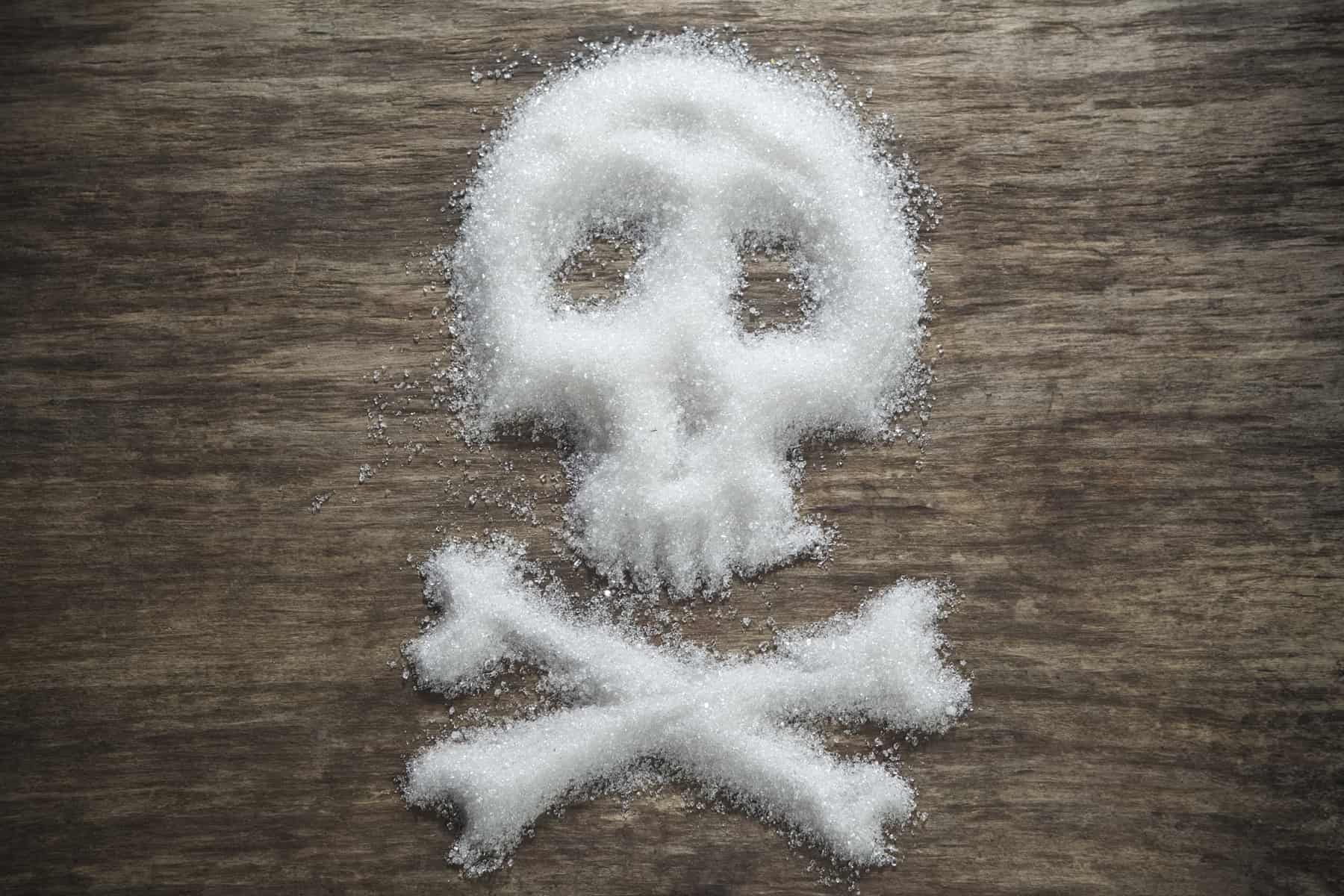
Sugar: The Ultimate Enemy to Health
TL:DR: Added and refined sugar is bad for you and causes a lot of different health problems. Stop eating and drinking it. Grow up!
Sugar is the ultimate enemy to today’s health climate. If you are trying to lose weight, quit sugar. If you are suffering from pain, inflammation, headaches, kidney stones, or gout, quit sugar. If you have brain fog, difficulty concentrating, anxiety, or depression, quit sugar. If you’ve been diagnosed with or suspect you are at risk of insulin resistance, metabolic syndrome (or pre-diabetes), or diabetes, quit sugar. If you are suffering from osteoporosis, immune dysfunction, or muscle cramps, quit sugar. This should be your first step when trying to get to better health.
Let's get some terminology straight. When I say sugar, I am referring to added and refined sugar. I am not referring to natural sugars found in fruit (if eaten with the fruit, fiber and all) or other naturally sweet foods. There are benefits to many foods that are naturally sweet, but foods with sugar added, or the good parts taken out, are a different story. Refined carbs also count as sugar because once digested, these become sugar in the body almost immediately. These are the white flours, skinless potatoes, and other starches or carbs that have been stripped of fiber and nutrients (and adding in synthetic vitamins to “replace” what was lost, doesn’t really do that much).

Eating carbs without fiber vs eating carbs with fiber, for the body, is like the difference in ease between eating a handful of grapes and eating a pomegranate. The fiber makes the body work to access the sweetness the same way a person would have to work to pick apart the pomegranate in order to get at the fruit. It slows down the digestive process, keeps you full longer, and draws out the absorption of sugar over a longer period of time. Without fiber, it is as simple as popping a whole grape in your mouth and chewing it up. The sugar is absorbed almost immediately, the blood sugar spikes, and you are hungry again after a very short time.
Refined sugar is NOT an essential nutrient. It never has been. Nowadays, people have no trouble getting enough carbs to fuel their day to day activities with regular food, and in many cases people get enough to fuel the activities of a marathoner while living a sedentary lifestyle. Carbs are not bad if they are eaten in moderation and in a whole-food form (with all the vitamins, minerals, fiber, and other nutrients they were designed with). Refined and added sugar should have no place in anyone’s diet except as a once in a blue moon treat (definitely not every day).
Refined sugar, like many drugs, is a poison that has no positive health benefits and causes many, many, many health problems. To top it off it is extremely addictive. Studies have even been done on rats that put the strength of sugar addiction higher than that of certain opioid drugs, as well as cocaine. (https://pubmed.ncbi.nlm.nih.gov/23719144/) The worst part, however, is that sugar and sugar addiction is socially acceptable. People guzzle sodas, sweet teas, and energy drinks (which are a whole new level of bad) and joke about how they are addicted to the stuff and everyone nods and laughs knowingly because they are all addicted as well. Added sugar is, in fact, present in about 74% of all packaged products in the grocery store (check the ingredients before you buy anything!)
People reason, “It can’t be that bad, it is just a food.” Wrong! Refined sugar is not a food. If anything, it is a refined extract similar to a drug or medicine. But, unlike a drug or medicine, it has no medically redeeming qualities, other than a high. Unless you count “it tastes good” as a medically redeeming quality.
Now, on to the specific negatives of sugar consumption.
Sugar makes you Fat

Sugar makes you fat, period. Your body was never meant to absorb or handle the amount of sugar we are shoveling into it. When you consume sugar, most of it goes to your liver, which is in charge of regulating much of your blood chemistry. Much of that sugar (either carbs or other forms) is converted by the liver into glucose which is pumped through the blood until it gets where it is needed. If the liver is overloaded with sugar, it starts turning the sugar into fat, which can be stored around the body to be used as energy storage. This is good if you are going through times of famine and don’t want to die of starvation. But when was the last time that happened in America? Were any of us alive? If you absolutely overload the liver with pure sugar (usually in the form of fructose, as in “high fructose corn syrup”), most of that sugar hits the liver all at once (as opposed to when you eat sugars along with fiber which spaces this out significantly). The liver sort of panics and starts throwing as much of that sugar into fat as possible. Much of that fat ends up in the liver itself which leads to problems such as Non-alcoholic fatty liver disease (NAFLD). Interestingly enough, this is very close to the response the liver makes when it is hit with alcohol on an empty stomach (which is why people get alcoholic fatty liver disease). There are even children who have developed NAFLD because of the amount of juice, soda, and other sweets they are eating and drinking throughout the day. (Fruit juice is almost as bad as soda, as far as pure sugar content is concerned.)
Insulin Resistance, Diabetes, Kidney Stones, & Gout

When the liver struggles because of the build-up of fat and overload of sugar, the pancreas starts to struggle. Your body becomes insulin resistant. The easiest way to understand insulin resistance is to imagine insulin as the donkey in the story of the nativity. The donkey carries the pregnant virgin Mary (the sugar) to the inns (the cells). But because the cells are already full of sugar and energy, they tell the sugar that there is “no room in the inn”. The insulin carries it’s load of sugar from cell to cell, getting rejected until it finally finds a place in the fat (the stable). Insulin resistance is when the cells reject the insulin and the sugar it carries and this leads to extremely high levels of sugar in the blood. Congratulations, you are now prediabetic.
Eventually, the pancreas will stop producing insulin altogether, because, “What’s the point? None of the cells are accepting insulin anymore anyway.” Now you are diabetic. The sugar doesn’t get delivered to the cells which can either lead to your blood sugar getting too high (getting syrupy) which leads to excessive urination which can cause dehydration or even lead to a diabetic coma. High blood sugar in diabetics can also lead to ketoacidosis, blindness, neuropathy, and kidney failure. Or, if blood sugar gets too low while diabetic, because your cells have started running out of energy and now need the insulin which is no longer being produced to provide them with new sugar, your body just starts running out of energy and things will start shutting down (like your heart and your brain).
Another function of insulin is to tell cells primarily in the kidneys to reabsorb sodium, causing salt sensitivity and high blood pressure and to excrete ammonia, which is then carried through the blood to the kidneys and out through the urine. This results in weakened kidney function and the acidification of the urine and eventually the blood (if allowed to progress into kidney disease) due to a impaired ammonia buffering and a build-up of uric acid (both due to the kidney function issues and due to the fact that high sugar diets independently cause high uric acid levels on their own). The increased acidity causes the uric acid to crystalize, which causes kidney stones and gout, both of which are incredibly painful conditions.
These all used to be “rich people problems” because only the very wealthy could afford to eat in a manner that would give them diabetes or gout. The poor were left to their minimally processed barley cakes, peas, and river-caught salmon. Now, it has flip flopped, and the poor eat the now-cheap, machine-processed sweets, and the rich eat the organic, all natural “peasant food”.
Sugar causes Pain

Next, sugar literally causes pain. Just pain in general. Back to the liver and the creation of fats caused by too much sugar. These free fatty acids made from sugar (aka Triglycerides) that float around in your blood causing thickness of the blood in the bloodstream, which decreases overall circulation and can lead to blood clots and plaque build-up. When they are broken down and digested as energy when needed they cause a little bit of irritation. The body responds to this irritation with an immune response known as inflammation. Usually, inflammation results in swelling and redness (where you can see it), but the most common response is the feeling of pain. This is a defense mechanism that stops you from moving or touching the irritated area and making it worse while the immune system does it’s job of cleaning and repairing the problem. Much of the pain we experience (aside from emotional or spiritual pain, I guess) is caused by this inflammatory response. Obviously, barring injury, genetic conditions, and nerve problems (like neuropathy), this pain and inflammation is very likely to be a result of your diet, and, primarily, sugar (though overly processed fats also contribute to this problem). An overconsumption of sugar, then creates excessive triglycerides, which cause irritation, inflammation, and pain when broken down, not to mention the potential heart disease caused by the poor circulation this causes as well.
Sugar indirectly & directly causes Deficiencies
Natural sugars within the foods they come in (in moderation) can be beneficial and healthy. Foods such as fruit, beets, raw honey, milk, carrots, and other natural foods are sweet, but not overly sweet. These foods are often chock full of other nutrients as well. Fiber slows down the absorption of sugar to manageable levels as well as feeds the good bacteria in your gut, easing your digestive tract. Enzymes, vitamins, minerals and other nutrients found in these foods all do wonders for your health and in many cases are essential for your survival.
Refined sugar is devoid of all that. Your body uses up a certain amount of vitamins and minerals to process sugars and carbs. If you are eating refined sugar, you are in essence draining yourself of vitamins and minerals without providing anything to replace that which is lost (those things that are naturally present in “real food”). If this goes on for too long, your cells become deficient in all the essential nutrients they need to function and things start shutting down. I can’t tell you how often I have to help my clients with B vitamin deficiencies (B vitamins are essential for healthy heart and brain function) because the B vitamins are often the first to go in the wake of extreme sugar consumption. The lack of B vitamins can lead to heart flutters, missed heartbeats, pernicious anemia, anxiety and depression (because B vitamins also help with brain and nerve communication), hormone imbalances, and overall heart failure when it gets overly serious (though at this point, you probably have several issues that are affecting the heart as well).
Going along with the theme of your body losing nutrients because of sugar consumption, there was a study done in 2018 that found that it is in fact added sugar, not salt that is the primary cause of osteoporosis. (https://www.ncbi.nlm.nih.gov/pmc/articles/PMC6140170/) Sugar literally pulls the calcium out of your bones, into the bloodstream and carries through the kidneys and out with the urine. When combined with calcium and vitamin D insufficiency in the diet, this progresses to a real problem. It has even been said that the sugar you eat during your 20’s and 30’s contributes significantly to your future chances of developing osteoporosis. THIS IS RELEVANT TODAY if you are still young. You play now, but you will absolutely pay later.

For those of you unfamiliar with osteoporosis, it is essentially the breakdown of your entire skeletal system. Your bones become brittle and fragile because of the loss of bone density. If you’ve seen pictures, it looks like a comparison of styrofoam (the healthy bone) and a kitchen sponge that the dog used as a chew toy (the osteoporosis bone). With osteoporosis, your bones will break more often, and you will literally start to shrink. Gravity starts to win the battle and your bones become compacted. You will lose inches, if not a foot off your height, and your back will become sore, tired, and hunched.
Due to the effect that sugar has on the kidneys’ ability to reabsorb nutrients (like calcium), excessive sugar consumption causes an increase in the amount of vitamins and minerals lost through the urine. Because of this loss of nutrients (especially calcium) from the blood through the kidneys, the body signals the breakdown of bone and other tissue to replace lost blood calcium and other nutrient levels, which is then lost in the same way. Thus sugar literally causes us to flush our nutrients down the toilet.
Sugar indirectly causes & exacerbates Cancer

There is a myth that sugar feeds cancer. That the glucose made from the carbs we eat spreads the cancer at a faster rate. From what I’ve been able to find, most studies have shown that sugar doesn’t directly cause cancer, but, rather, does so indirectly. There are between 11-13 types of cancer that you are more likely to develop if you are obese (and we know that sugar helps make you fat). Sugar can disrupt the body’s natural functions through insulin resistance and inflammation build-up, which in some cases may lead to cancer. Glucose feeds all the cells in your body. Healthy cells as well as cancer cells. So completely cutting carbs out of your diet to “starve” cancer cells is just as likely to “starve” the healthy cells as the cancer cells. If you are eating whole foods and cutting out added sugars, your body as a whole will become more healthy and you will have a greater chance at fighting off cancer, but the act of cutting out carbs isn’t necessarily directly linked with starving out the cancer cells. It is more of an indirect thing.
Conclusion
Just stop eating refined and added sugars! Just quit it! Grow up and eat your fruits and vegetables. Sugar is bad for you! Obviously, a treat, like a slice of birthday cake or a scoop of ice cream is allowed very occasionally as a celebratory thing (I’m not a monster), but those are treats and rewards, not a daily ritual. The first 3 bites of cake or ice cream are the best, so stop there. Enough to enjoy the flavor without going overboard. Sweet foods are not all bad. We already talked about fruit and other naturally sweet things. As my dad often says, “God teaches us that sweets can be a good thing. ‘Sweet is the work’, ‘The Land of promise is flowing with milk and honey’ (which, by the way, is the recipe for ice cream). But the devil makes a counterfeit for every good thing.”
If you live in America, or on Earth, chances are you are eating too much sugar. If you don’t want all of the things that I’ve written about to happen to you and your family, please evaluate your life and your diet and cut sugar out. If your love of sugar outweighs your desire to avoid these things, then, by all means, carry on, but don’t say no one told you better.
Thanks for reading.
DeGrey Christensen, ACN (Applied Clinical Nutrition)

Check out our Youtube Channel
How to make Apple Cider Vinegar
How to Make Sauerkraut
Introduction to Cold Laser Therapy
Cold Laser Acupuncture Treatment
Healing @ Home: Allergy Elimination
Releasing Trapped Emotions
Intro to Muscle Testing
How to Dry and Revive Your Sourdough
Get In Touch
Email: kylesinthegarden@gmail.com
Address: 1172 E 100 N #12, Payson, UT 84651
Hours: Mon – Thur | 9:00am – 5:00pm
Phone Number: (801) 360-0749
Join Our News Letter